

|
Acting for a Better World |

|
Portland's Legacy of Green |


Photography by Kristin Finnegan
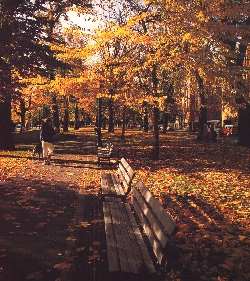 When Sha Spady gazes out her favorite window, she sees the steep walls of
Newell Creek Canyon rising up behind a patchwork of fir and deciduous trees.
Cloud cover blocks her view of
snow-capped Mount Hood
this afternoon, but the soft light coaxes out the many shades of green
that paint these hills. Her father bought land on the edge of this wild canyon
before she was born, and she grew up breathing in the smells, sights and
sounds of a place that has remained remarkably untouched by time. Today,
it's a dozen miles, but also a world removed, from the bustling streets of
downtown
Portland.
When Sha Spady gazes out her favorite window, she sees the steep walls of
Newell Creek Canyon rising up behind a patchwork of fir and deciduous trees.
Cloud cover blocks her view of
snow-capped Mount Hood
this afternoon, but the soft light coaxes out the many shades of green
that paint these hills. Her father bought land on the edge of this wild canyon
before she was born, and she grew up breathing in the smells, sights and
sounds of a place that has remained remarkably untouched by time. Today,
it's a dozen miles, but also a world removed, from the bustling streets of
downtown
Portland.
When a flicker drops in for a landing, ruffling its feathers, it reminds Spady that she shares this special place with creatures that have lived here since long before humans arrived to put Oregon on the map. "This canyon speaks without words, to something deeper and older than society," she says.
Thanks to the overwhelming passage of a $135 million green spaces bond measure last spring, Spady and future generations of Oregonians will continue to share this undisturbed land with the birds and the deer and the fish that make their home here, a stone's throw away from the end of the Oregon Trail. Residents of the Portland metropolitan region have seized "a golden opportunity to preserve the future" says Spady. During the campaign for the bond measure, her passion was matched by hundreds more grass-roots activists who felt such a strong emotional connection to a favorite trail, stream, park or grove of trees that they walked door-to-door to get out the vote. The money will be used to purchase and preserve green spaces throughout the region, creating a network of wild places in the heart of a rapidly growing metropolitan area. Newell Creek Canyon is just one of 14 targets for what green-space proponents call "landbanking" or buying land outright to protect it from development. Another 90 smaller projects and five regional trails are included in the budget that voters approved, almost two to one. In all, 6,000 acres will be preserved, giving residents in every corner of the region easy access to the outdoors.
Portland's commitment to a green, livable future-for the mutual benefit of people and wildlife-offers inspiration and some useful lessons for other communities struggling with the problems that come hand-in-hand with fast population growth. If one message is clear from Portland's experience, it's that livable communities don't happen by chance.
A few days before the May green-spaces election, Portland Mayor Vera Katz traveled to Florida to accept the prestigious Seaside Prize on behalf of her city. Typically awarded to individuals who have enhanced the quality of their communities, the Seaside Prize this year went to Portland to honor the city's visionary approach to urban planning. Katz called the award "a tribute to those who've planned for Portland's future wisely by thinking a generation ahead."
That willingness to look out for the next generation is the same thinking behind the current green-spaces project. "This is legacy stuff", says Ron Klein, who works on public education for a regional government agency called Metro. As he spreads out a map to highlight sites that will be preserved as green spaces, he says, "It's an opportunity for both wildlife and people to benefit."
As the nation's only elected regional governmental agency, Portland-based Metro has masterminded the green-spaces program as one piece of a much larger land-use planning agenda. From its headquarters on a busy street in an urban neighborhood on the rebound, Metro tackles such sweeping issues as transportation, waste disposal and, most significantly, land-use planning for a region that includes 24 cities in three counties.


|
Disclaimer
. © Copyright 1995,
Better World Publishing All rights reserved. Better WorldSM and BWZ are Service Marks of Better World Publishing Questions and comments? |
|
|
