
A NATIONAL TREASURE THREATENED
|
| UTAH'S REDROCK WILDERNESS:
A NATIONAL TREASURE THREATENED |
"I BELIEVE THAT WE OWE FUTURE GENERATIONS THE CHANCE TO EXPERIENCE THE MAGIC OF OUR LIVING EARTH--IN ITS BREATHTAKING NATURAL BEAUTY AT ITS BEST--SOUTHERN UTAH."
- Robert Redford, Utah citizen
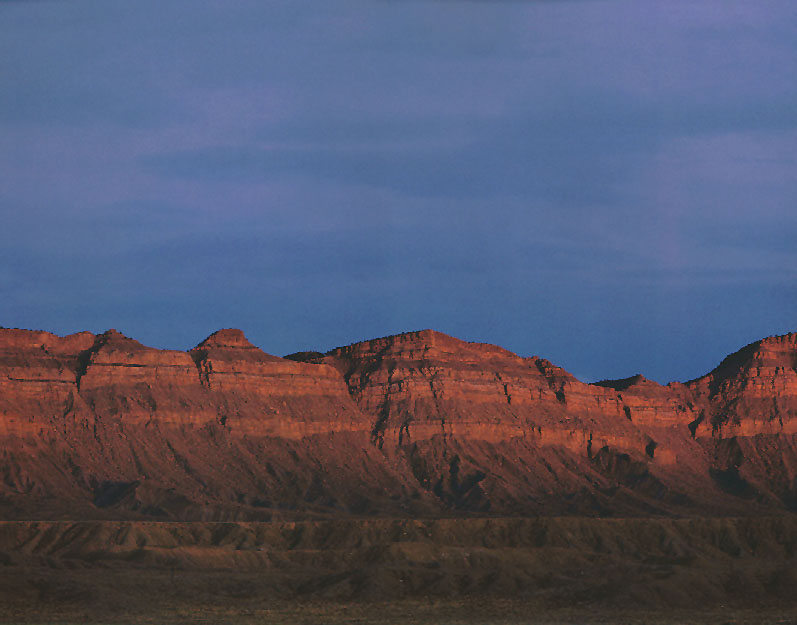
Book Cliffs, Book Cliffs at sunset. © TOM TILL | BOOK CLIFFS-UINTAH BASIN AND GREATER DINOSAUR. This expansive region contains one of the largest contiguous blocks of unprotected roadless country in the lower 48 states. Because of its huge size, it sustains some of the West's healthiest populations of large mammals, such as deer, elk, black bear, cougar, and bighorn sheep. Also important to biological diversity is the White River roadless area, which contains one of the highest concentrations of endemic plant species to be found anywhere in the state. H.R.1745/S.884 would promote the transformation of one of Utah's finest wildlife sanctuaries into an intricate web of mining roads, drill pads, and pipelines. To facilitate potential coal, oil, gas, and oil shale development, the bill omits four huge chunks of roadless land , totalling 360, 000 acres within the Book Cliffs region alone, including a ten- to fifteen-mile-deep swath running for sixty miles across the rugged face of the Book Cliffs between the Green River corridor, where proposed oil exploration currently threatens endangered peregrine falcons. And, of six roadless areas surrounding Dinosaur National Park, not one would be protected by H.R.1745/S.884. |

Slide Show Menu | BWZ Table of Contents | The Battle for the Utah Wilderness | What You Can Do
Content © 1995 Southern Utah Wilderness Alliance (SUWA)

| 
| Disclaimer . ©Copyright 1995, 1996, Better World Publishing All rights reserved. Better WorldSM and BWZ are Service Marks of Better World Publishing Questions and comments? | 
|