
A NATIONAL TREASURE THREATENED
|
| UTAH'S REDROCK WILDERNESS:
A NATIONAL TREASURE THREATENED |
"WILDERNESS IS ESSENTIAL FOR THE ECONOMIC PROSPERITY OF UTAH...I RECEIVED HUNDREDS OF CONTACTS FROM COMPANIES THAT NEED MY SKILL IN EVERY PART OF THE COUNTRY, BUT I STAYED HERE--AND THE ONLY REASON I STAYED HERE IS BECAUSE OF UTAH'S INCREDIBLY BEAUTIFUL WILDERNESS."
- Ron Raunikar, Utah citizen
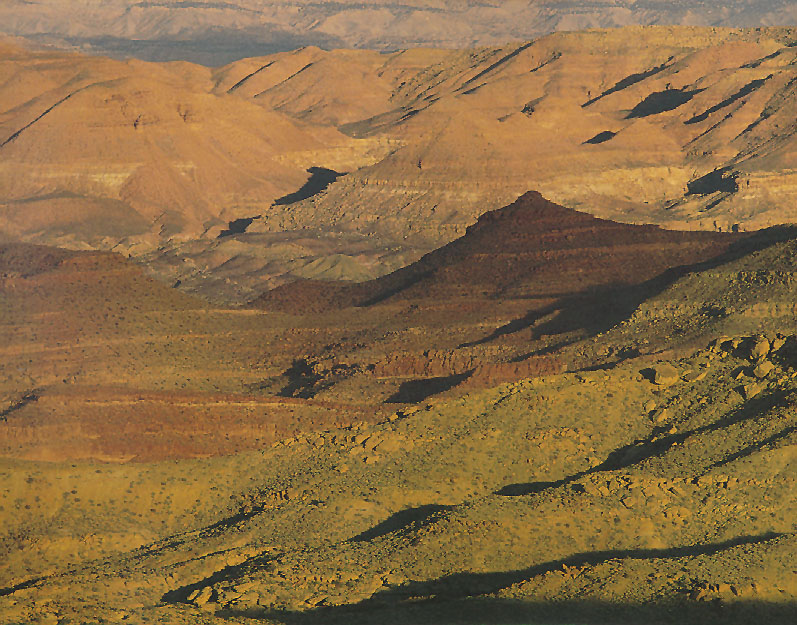
Burning Hills Unit, Kaiparowits plateau aerial view across Burning Hills roadless area. © SCOTT SMITH | KAIPAROWITS PLATEAU. One of the largest remaining wild areas in the lower 48 states, the Kaiparowits region features forested plateaus, deeply incised canyons and stair-stepping cliff-walls, as well as a broad diversity of fauna, flora, and paleontological resources. Ten of eleven roadless areas here comprising well over a half-million acres would be omitted from wilderness designation by H.R.1745/S.884 to allow coal mining and associated developments such as power lines, pipelines, road and railroad construction. Andalex Resources, a Dutch-owned multi-national mining corporation, proposes to construct a paved access road, a coal mine, power lines, and a series of communications sites scattered across three roadless areas on the Kaiparowits. The coal would be trucked 240 miles, railed 200 miles, and shipped across the Pacific Ocean, where it would be sold to Japan, Korea, and Taiwan. |

 Next
Next
Slide Show Menu | BWZ Table of Contents | The Battle for the Utah Wilderness | What You Can Do
Content © 1995 Southern Utah Wilderness Alliance (SUWA)

| 
| Disclaimer . ©Copyright 1995, 1996, Better World Publishing All rights reserved. Better WorldSM and BWZ are Service Marks of Better World Publishing Questions and comments? | 
|